How Does the Stock Market Work? A Beginner's Guide
A comprehensive demystification of equity exchanges, market participants, order matching engines, clearing corporations, and price discovery mechanisms.
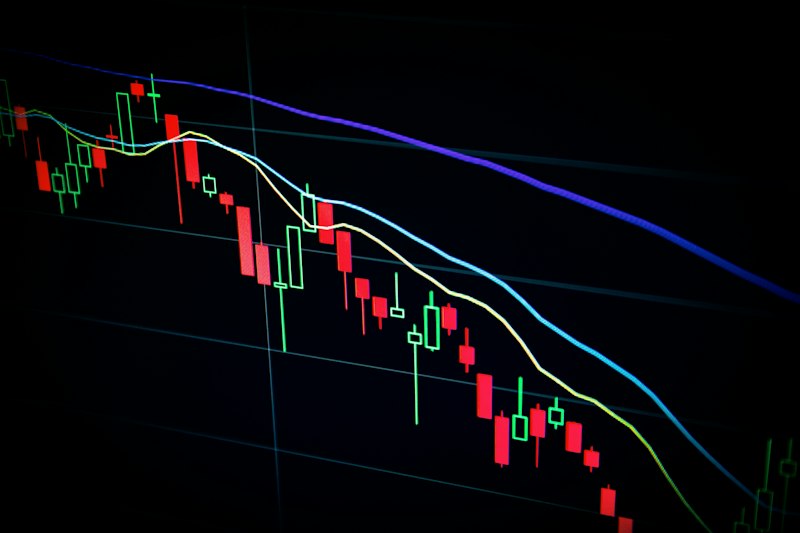
Modern stock exchange trading floor with digital ticker displays and market indices • Editorial Photography & Analysis
Key Takeaways
A stock exchange is a centralized, highly regulated secondary marketplace where buyers and sellers trade fractional equity ownership in public firms.
Share prices fluctuate through dynamic continuous double-auction order matching engines based on real-time supply and demand.
Regulators (such as the SEC in the US or SEBI in India) enforce strict transparency, disclosures, and investor safeguards.
The primary market is where corporations issue new shares via IPOs, while the secondary market is where investors trade existing shares amongst themselves.
Every working day, trillions of dollars in equities trade across global financial capitals—from the New York Stock Exchange (NYSE) and Nasdaq to the London Stock Exchange (LSE) and the National Stock Exchange of India (NSE). Yet for newcomers, the mechanics of how a transaction actually executes remain shrouded in mystique.
At its fundamental core, the stock market is simply an auction house. It provides a secure, liquid venue where companies can raise expansion capital and everyday investors can buy ownership stakes in the world’s most innovative enterprises.
Capital Market Risk Notice
Stock values fluctuate based on earnings, interest rates, and investor sentiment. Trading individual equities without adequate research carries the risk of permanent capital loss.
The Anatomy of the Stock Market Ecosystem
Trading a share involves a coordinated relay between several heavily regulated financial institutions:
The Exchange (NYSE, Nasdaq, NSE, BSE): The electronic platform providing the digital trading floor and rulebook.
Stockbrokers (Fidelity, Charles Schwab, Zerodha, Interactive Brokers): Licensed intermediaries providing retail investors access to exchange order books.
Depositories (DTC in the US, NSDL/CDSL in India): The electronic vaults where your shares are safely held in electronic (dematerialized) form.
Clearing Corporations: Institutional entities that guarantee trade settlement, ensuring sellers receive cash and buyers receive shares.
Statutory Regulators (SEC, SEBI, FCA): Government authorities policing insider trading, accounting fraud, and disclosure compliance.
Primary Market vs. Secondary Market
Understanding the distinction is vital:
Primary Market (Capital Formation): When a private corporation requires capital to construct factories or fund research, it issues shares to the public for the very first time via an Initial Public Offering (IPO). The capital paid by investors flows directly onto the issuing company’s balance sheet.
Secondary Market (Liquidity & Price Discovery): Once shares are listed on the exchange, investors trade them between themselves. If you buy 100 shares of Microsoft today, not a single penny goes to Microsoft; your capital goes to another investor who chose to sell their shares at the agreed market price.
How Prices Are Determined: The Order Book Engine
Stock prices do not move by magical decree. They are driven by an electronic Continuous Double Auction.
Every second, thousands of buyers submit Bids (the maximum price they are willing to pay) and sellers submit Asks (the minimum price they are willing to accept).
Sample Electronic Order Book
Bid Volume (Buyers)
Bid Price (USD)
Ask Price (USD)
Ask Volume (Sellers)
1,200
$150.20
$150.25
800
3,500
$150.15
$150.30
2,100
5,000
$150.10
$150.40
4,200
The $0.05 difference between the highest buyer ($150.20) and lowest seller ($150.25) is known as the Bid-Ask Spread. When a buyer places a market order agreeing to pay $150.25, a trade executes instantly, and the “Last Traded Price” updates on tickers worldwide.
Market Infrastructure Verdict
Stock Market Mechanics Evaluation
9.6SUPERB
Modern electronic financial exchanges represent the pinnacle of price discovery and capital allocation efficiency. With T+1 settlement cycles and strict regulatory oversight, retail investors enjoy unprecedented liquidity, transparency, and counterparty protection.
Key Advantages
✓Near-instantaneous liquidity: convert equity ownership to cash in seconds
✓Fractional share investing allows owning premium global companies with minimal capital
✕Extreme short-term emotional volatility can induce irrational investor panic
✕Information asymmetry favors institutional high-frequency algorithms over casual day traders
Evaluation Criteria Breakdown
Market Transparency9.8 / 10
Liquidity & Execution9.9 / 10
Regulatory Protection9.5 / 10
Summary Specifications & Parameters
Settlement Cycle
T+1 Business Day (US & India)
Core Trading Hours
09:30 - 16:00 EST / 09:15 - 15:30 IST
Primary Order Types
Market, Limit, Stop-Loss
Why Do Stock Prices Go Up and Down?
Over multi-year horizons, stock prices correlate directly with three macroeconomic drivers:
Corporate Earnings & Free Cash Flow: If a business doubles its net profits over five years, its underlying intrinsic value rises accordingly.
Interest Rates & Inflation: When central banks increase interest rates, borrowing becomes expensive and fixed-income bond yields rise, creating competitive pressure that often dampens equity valuations.
Your shares are not held as assets on the broker's balance sheet; they are custodied electronically in your legal name at independent depositories (such as DTC or NSDL/CDSL) and protected by insurance entities like SIPC (up to $500,000 in the US). If a broker fails, your share ownership transfers seamlessly to another custodian.
What is a stock market index like the S&P 500 or Nifty 50?
An index is a statistical basket tracking the weighted performance of a select group of benchmark corporations. The S&P 500 tracks 500 of the largest publicly traded American corporations, serving as an economic barometer for the broader US economy.
What is the role of a market maker and stock exchange clearinghouse?
Stock exchanges like the NYSE, Nasdaq, or NSE provide the electronic matching engine for buyers and sellers. Clearinghouses guarantee trade settlement, ensuring sellers deliver shares and buyers deliver cash, completely eliminating counterparty default risk.
What is the difference between a Market Order and a Limit Order?
A Market Order executes immediately at the best available current market price, prioritizing speed over price certainty. A Limit Order executes only at your specified target price or better, ensuring price protection during volatile trading periods.
What causes stock prices to fluctuate sharply during trading hours?
Intraday stock prices move based on changes in the equilibrium between supply and demand. Factors influencing sentiment include quarterly earnings releases, central bank interest rate announcements, macroeconomic indicators, industry regulation, and geopolitical events.
Editorial & Regulatory Disclaimer: This article is published exclusively for educational and informational purposes. Income Innovate does not offer individualized investment, legal, tax, or banking advice. Market investments and credit instruments carry inherent financial risk. Review official statutory guidelines before making commitments.
Shivam covers stock markets, financial systems, loans, credit, business finance, taxation, economic developments, and the changing financial landscape. His writing focuses on explaining important financial concepts through clear examples and structured analysis.
Master the essential vocabulary of Wall Street: market capitalization, P/E ratios, bull vs bear markets, liquidity, volatility, and order execution terminology.